Amateur Observing Events
Amateur observing events require precise planning. Success depends on atmospheric conditions, celestial mechanics, and logistical preparation. Observers must select the right event type for the current lunar phase and seasonal sky.
Types of Observing Sessions
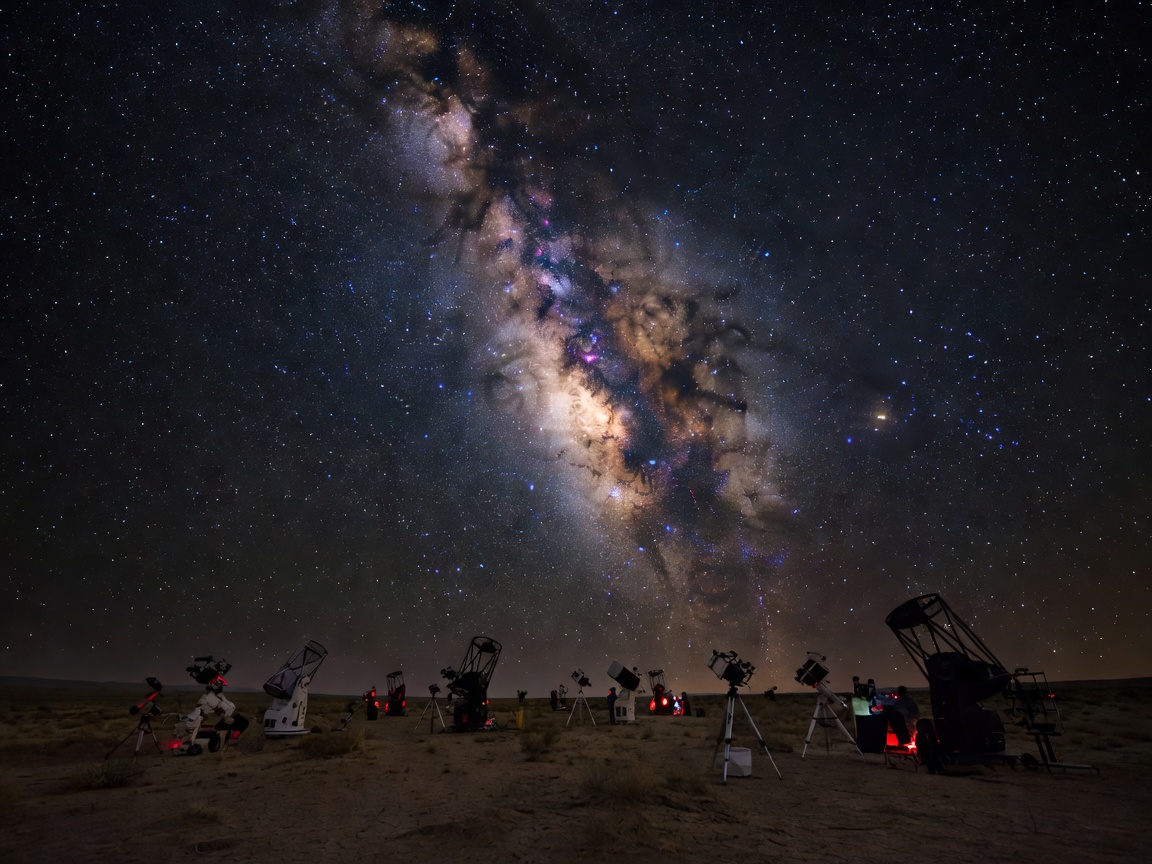
Scheduled observing nights fall into distinct categories. Deep-sky sessions target galaxies, nebulae, and star clusters. These mandate strict dark adaptation and occur exclusively during the new moon period.
Lunar and planetary sessions focus on high-magnification targets. They can occur under urban skies and during heavy moonlight. Meteor shower observing requires no optical equipment, utilizing wide, unobstructed horizons and reclining chairs to monitor specific atmospheric radiants.
Weather Considerations
Weather dictates event viability. Observers monitor three specific atmospheric metrics. Cloud cover determines basic visibility. Transparency indicates how clear the air is of moisture and particulates, critical for faint deep-sky objects.
Seeing measures atmospheric turbulence. Poor seeing causes stars to twinkle rapidly and planetary details to blur. High-magnification planetary observing requires excellent seeing, even if transparency is poor. Observing events are frequently canceled if models predict low transparency or high turbulence.
Public Observing Events
Clubs organize public outreach events to engage the community. These occur at easily accessible urban or suburban locations, such as parks or school grounds. Light pollution is high, restricting targets to the Moon, Jupiter, Saturn, and bright double stars.
During public events, experienced amateurs operate the telescopes. Visitors queue for eyepiece time. Organizers prioritize safety, using step stools for children and securing tripod legs to prevent equipment damage in crowded areas.
Event Preparation
Preparation begins days in advance. Observers generate target lists based on the right ascension and declination of objects visible from their specific latitude. Equipment batteries are charged. Optical tubes are cleaned of dew spots.
Clothing is a critical safety factor. Standing idle at night causes rapid heat loss, even in summer. Observers employ layered thermal clothing, heavy insulated footwear, and chemical hand warmers to maintain core temperatures during extended sessions.
Transport and Site Etiquette
Equipment transport requires vehicle space and secure packing. Optics are susceptible to vibration damage. Heavy mounts must be lifted correctly to avoid injury.
Site arrival must occur before astronomical twilight ends. Late arrivals ruin the dark adaptation of observers already on site. Headlights must be extinguished immediately. Red-light discipline is enforced upon entry.
Good For
- Viewing transient phenomena (comets).
- Collaborating on observation lists.
- Comparing eyepiece performance.
- Public astronomy education.
What To Know
- Events are subject to sudden cancellation.
- Thermal protection is mandatory.
- No white light is permitted on site.
- Arrival must predate total darkness.
Related Guides
- Stargazing Locations — Understand where these events take place.
- Astronomy Club Basics — Learn who organizes these sessions.
Planning an event?
Reach out with questions regarding observing parameters and weather limitations.
Contact Us