Stargazing Locations in Europe
Selecting a viable observing location involves analyzing light pollution maps, assessing local topography, and confirming legal access. European geography presents unique challenges balancing dark skies against urban density.
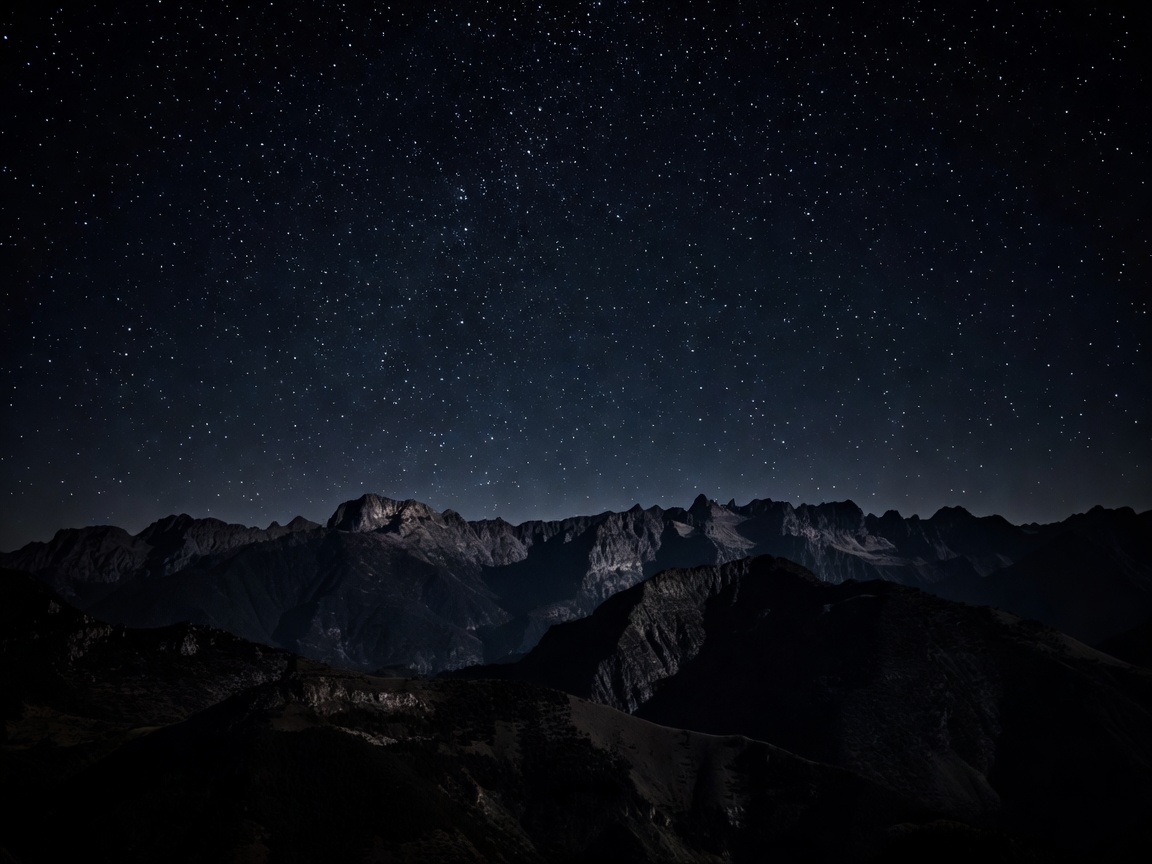
Evaluating Light Pollution
Artificial illumination degrades contrast, rendering faint objects invisible. Astronomers evaluate darkness using the Bortle Scale, ranging from Class 1 (excellent dark sky) to Class 9 (inner-city sky). Sky Quality Meters (SQM) provide objective numerical readouts of background darkness.
In Europe, true Bortle 1 skies are rare. Observers generally seek Bortle 3 or 4 locations, which offer sufficient darkness for galaxies and nebulae without requiring prohibitive travel times from population centers.
Horizon Quality
Dark zenith (overhead) skies are insufficient if the horizon is obstructed. Southern horizons are critical for Northern Hemisphere observers because the ecliptic—and planets—transit low in the south. Mountainous terrain blocks valuable sky area.
Ideal locations provide flat, unobstructed views to at least 15 degrees above the mathematical horizon. Coastal areas, high plains, and agricultural flatlands often meet these criteria.
Accessibility and Terrain
Transporting heavy equatorial mounts requires vehicle access. Sites accessible only by hiking are restricted to binocular or ultra-portable refractor observing. Paved access is preferred to protect sensitive optical collimation from vibration.
Setup surfaces must be level and stable. Asphalt retains daytime heat, creating thermal currents that degrade seeing conditions. Hard-packed dirt or short grass offers superior thermal stability for high-magnification observation.
Rural vs. Urban Observing
Rural locations offer high contrast but require significant transit time. They expose observers to wildlife, agricultural machinery, and lack of amenities. Security at remote sites requires observing in groups rather than solo.
Urban observing restricts targets to the Moon, planets, and bright double stars. However, backyard observatories eliminate transit time, allowing rapid deployment during brief breaks in cloud cover. Narrowband filters can mitigate urban light pollution for astrophotography.
Responsible Site Use
Accessing private land requires explicit prior permission. Public lands, including national parks, enforce nighttime parking restrictions. Observers must confirm that gates will not be locked during the session.
Site etiquette demands total light discipline. Observers must leave no trace, pack out all equipment and refuse, and avoid disturbing local livestock or wildlife. Irresponsible behavior results in permanent loss of access agreements for entire astronomy clubs.
Good For
- Maximizing optical contrast.
- Unobstructed planetary tracking.
- Dark adaptation maintenance.
- Safe group operations.
What To Know
- Bortle scales change with regional development.
- Terrain stability affects mount tracking.
- Permissions are mandatory.
- Local weather micro-climates vary.
Related Guides
- Amateur Observing Events — See how location dictates event types.
- Equipment Guide — Match equipment portability to site access.
Need location advice?
Contact us for guidance on evaluating regional light pollution and site safety parameters.
Contact Us