Astronomy Club Community
Amateur astronomy is inherently observational but thrives as a collective pursuit. Local societies facilitate knowledge transfer, enforce safety standards at remote sites, and maintain historical observation data through member logging.
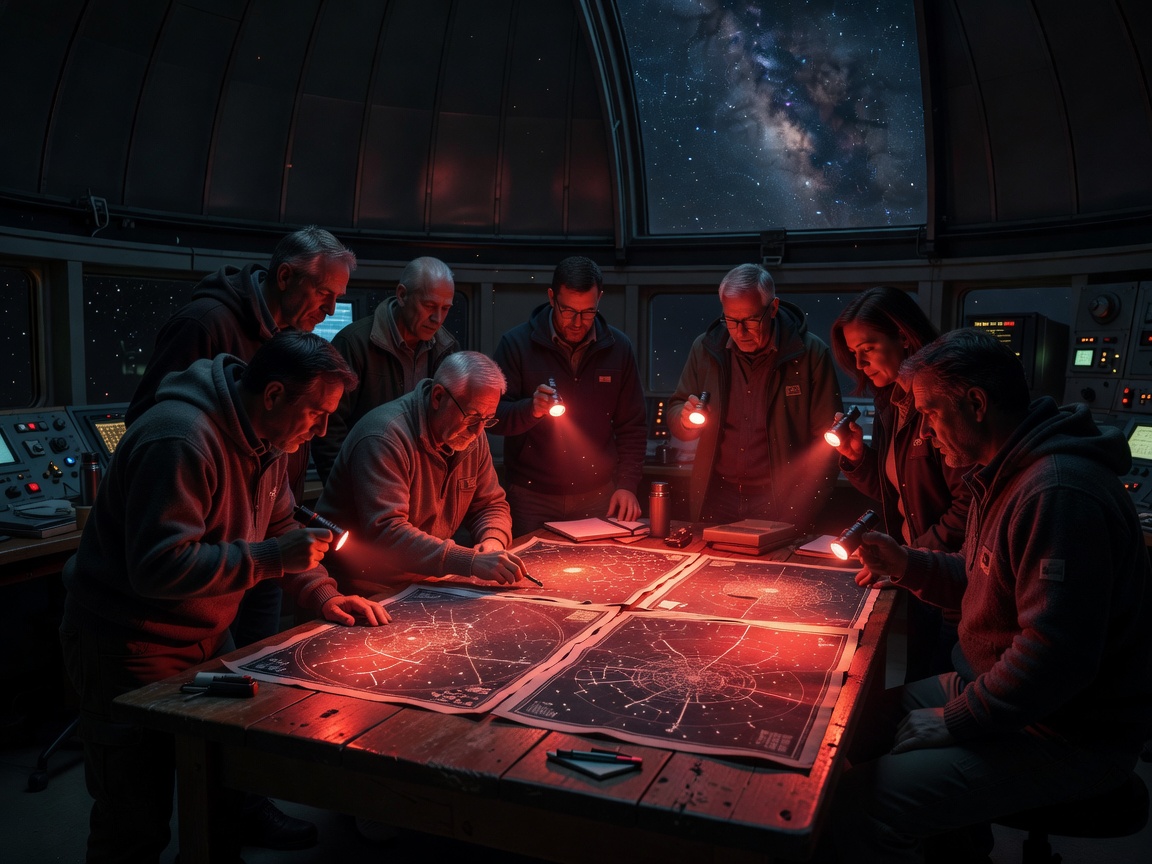
Local Astronomy Societies
Societies serve as the primary organizational unit for amateur astronomers. They manage access to dark-sky property and coordinate group observing dynamics. Operating in a society structure ensures compliance with local land-use laws and provides liability coverage during events.
Club meetings focus on administrative duties and technical presentations. Members debate equipment acquisitions, review recent celestial events, and organize maintenance schedules for shared club hardware.
Observing Partners
Field observation carries inherent risks. Extreme cold, rugged terrain, and fatigue make solo observing at remote locations hazardous. Observing partners provide immediate assistance during equipment failures or medical incidents.
Partnerships also improve data collection. Two observers verifying a marginal detection of a faint galaxy increases the reliability of the observation report. Partners frequently split equipment loads, combining different optical configurations for a comprehensive session.
Beginner Mentoring
Mentoring accelerates the learning curve. Navigating celestial coordinates and mastering averted vision takes time. Experienced members instruct novices on star-hopping techniques, bypassing the frustration of relying solely on computerized mounts.
Mentors also enforce site discipline. They correct improper flashlight usage, teach thermal management of optics, and prevent beginners from purchasing inappropriate equipment based on marketing claims.
Public Outreach
Outreach is a core function of the community. Societies fulfill educational mandates by hosting sidewalk astronomy events. These events introduce the public to lunar craters, planetary rings, and bright star clusters.
Members volunteer equipment and time. They field basic questions, explain orbital mechanics simply, and demonstrate safe solar viewing techniques during daytime events using certified solar filters.
Observation Logs
Logging observations standardizes community data. A proper log records the object designation, date, time, equipment used, magnification, seeing conditions, and transparency. Blank logbooks are common in club libraries.
Sketches accompany written logs. Drawing forces the observer to analyze the field of view critically. These logs are shared during meetings to verify target acquisition and compare notes on transient phenomena like comets or supernovae.
Good For
- Accelerating technical knowledge.
- Ensuring field safety.
- Accessing structured data.
- Engaging in science outreach.
What To Know
- Societies require active participation.
- Mentorship relies on patience.
- Outreach demands robust equipment.
- Logs must be standardized and legible.
Related Guides
- Club Basics — Understand the formal structure of these communities.
- Observing Events — See how the community operates in the field.
Community engagement questions?
Contact us for information regarding society structures, mentoring practices, or logbook standards.
Contact Us